US (USD)SearchCart (0)

Teak

One species, one grade. Every board in every piece we sell is Indonesian plantation teak from Java, heartwood only, SVLK certified, conditioned to 8 to 10 percent moisture before it is cut.


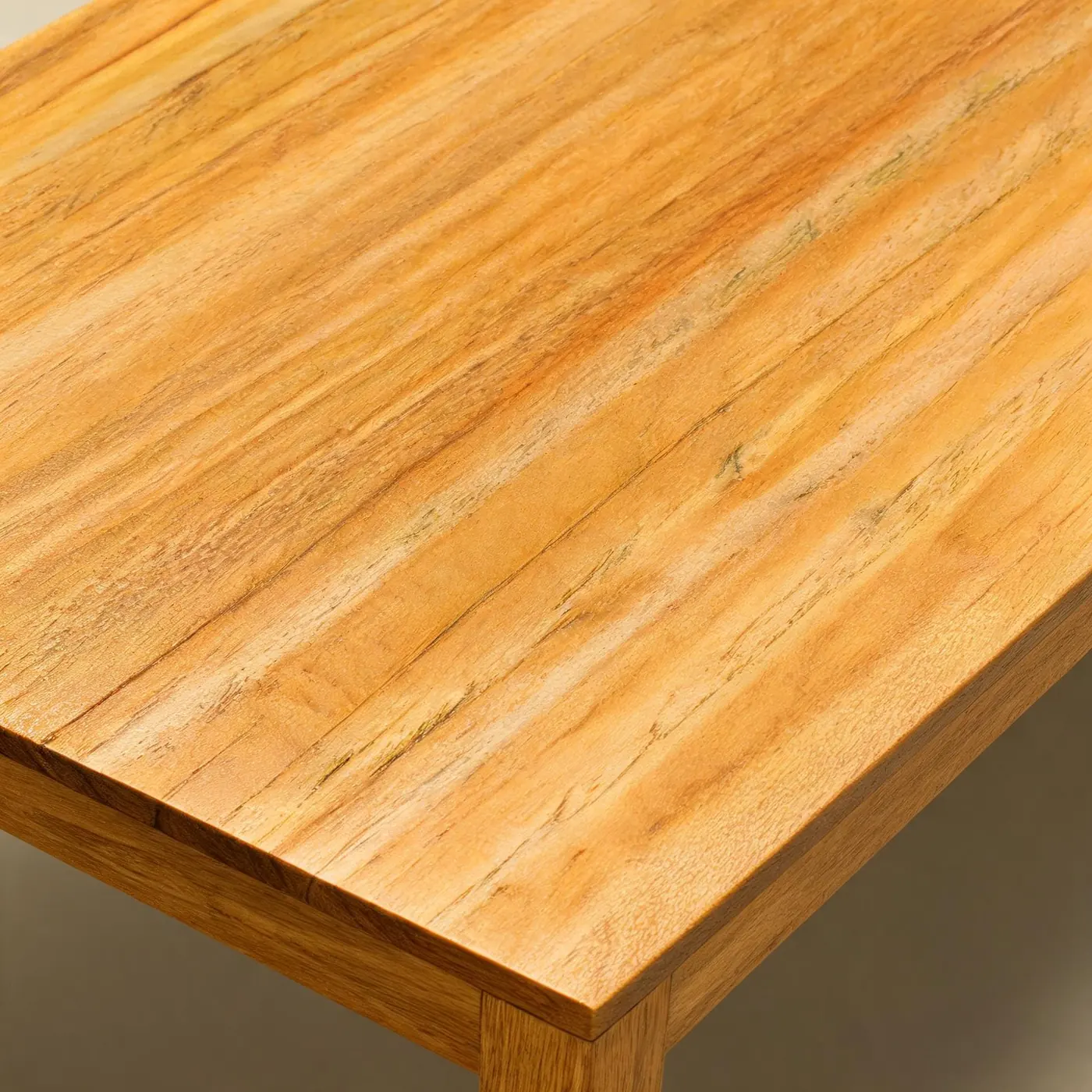
Close-up of an oiled teak top with the grain running across the edge joint

Where it comes from

Java, Indonesia. Plantation teak, not forest teak. The stands are planted, thinned and cut on a rotation, and every batch we buy travels with SVLK papers, the Indonesian legality system that tracks a log from the plot it grew on to the container it leaves in.

We buy rough sawn stock and cut it ourselves. That is the only way to hold the grade: 100 percent heartwood, the dark oily core of the tree. Sapwood is the pale outer ring. It is cheaper, it takes oil unevenly, and it moves at a different rate than the wood next to it. We do not put it in furniture.

See the workshop

How teak ages indoors

Teak outdoors goes silver. That is the picture most people have of it, and it is the wrong one for this furniture. Indoors, out of ultraviolet light and rain, teak does the opposite. It darkens.

A new Natural piece reads golden and open. After a year indoors it pulls toward amber, and the mineral streaks that run through the grain get easier to see rather than harder. Umber starts dark and moves less, because the oil already carries the pigment.

The change is not even. A top that sits under a south window will darken faster on that side. If that matters to you, turn the piece once a season for the first year and it evens out. After that it is stable.

The wood also moves. A solid top takes on width in a humid summer and gives it back in a dry winter. That is normal, it is why the joinery is drawn rather than glued rigid at every point, and it is why we condition every board to 8 to 10 percent moisture before it is cut.

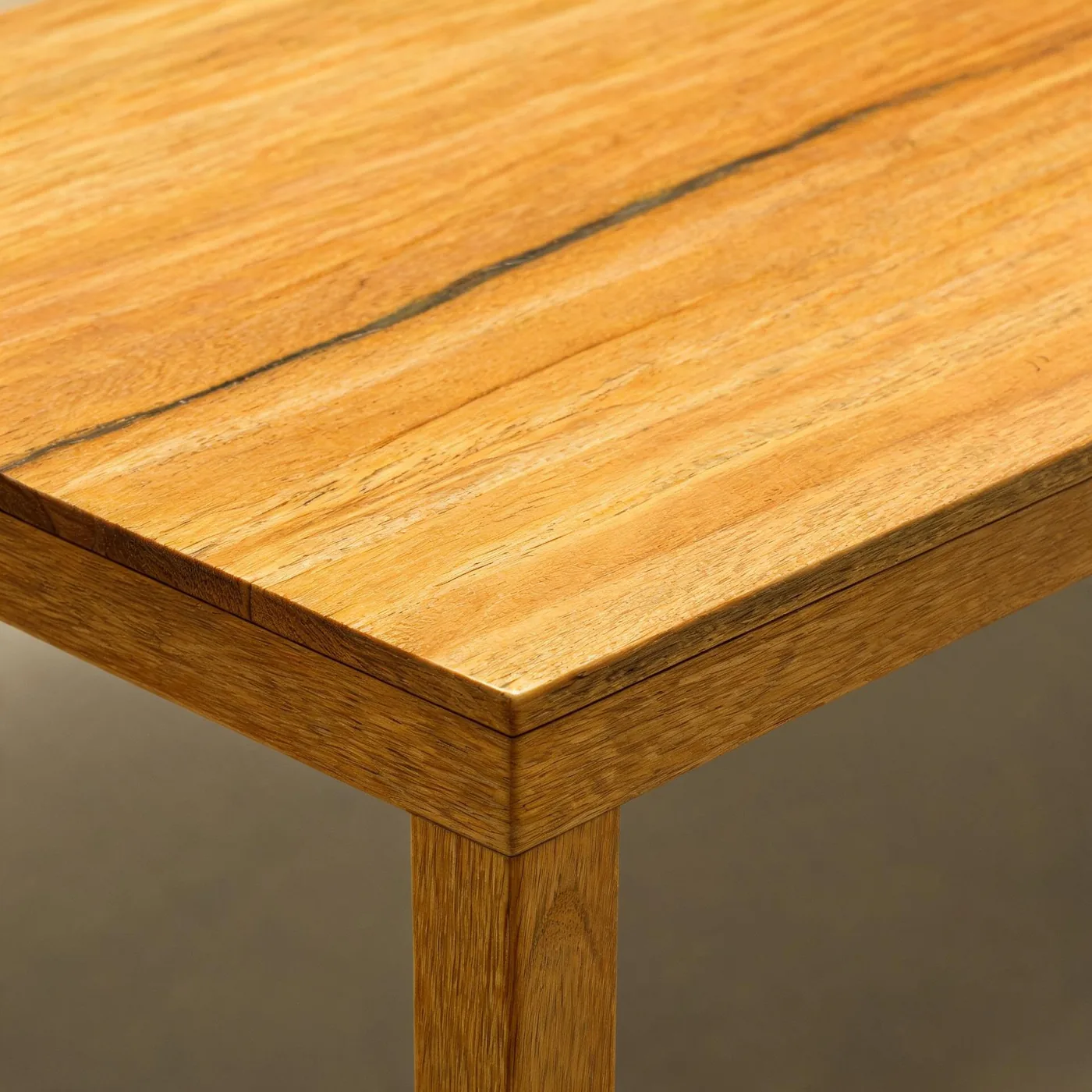
Corner of an oiled teak top showing the edge joint and a mineral streak in the grain

Teak carries oil in its own grain. That is why it holds a joint indoors where other hardwoods dry out and open at the seam.

A worker sanding a teak surface by hand on the workshop bench

Cut, jointed and oiled in one building

The teak arrives at our workshop in Gianyar, Bali as rough sawn plantation stock with its SVLK papers. It leaves as a finished piece with your order number on the crate. Nothing in between is subcontracted.

Boards are matched by hand before glue up, so the grain runs in one direction across a whole top. Surfaces are sanded to 240 grit and finished with a penetrating oil, not a film. There is no lacquer to chip and nothing to peel.

See how it is made

The specification

See the furniture
Species Indonesian plantation teak, Javanese origin, SVLK certified
Grade 100 percent heartwood. No sapwood, no knots in a top
Construction Solid. Tops edge joined from wide boards. No veneer, no MDF core
Joinery Concealed. Flat continuous surfaces, no visible tenon, dowel or bracket
Top thickness 30 mm dining table · 25 mm side table
Leg section 70 × 70 mm dining table, flush at the corner · 45 × 45 mm chair
Moisture content 8 to 10 percent, conditioned for an American interior
Hardware Stainless A2, recessed, not visible in use
Finishes Natural, clear penetrating oil · Umber, dark penetrating oil
Upholstery Unbleached linen or olive wool felt, on 03 Dining Bench and 04 Lounge Chair only

Care

Every day
Wipe with a damp cloth and dry it. Use coasters under anything hot or wet. Oiled teak resists a water ring better than a lacquered surface does, but it is not proof against a mug left overnight. Do not use silicone polish, wax, or a spray cleaner with solvent in it. They sit on top of the oil and block the next coat.
Re-oiling
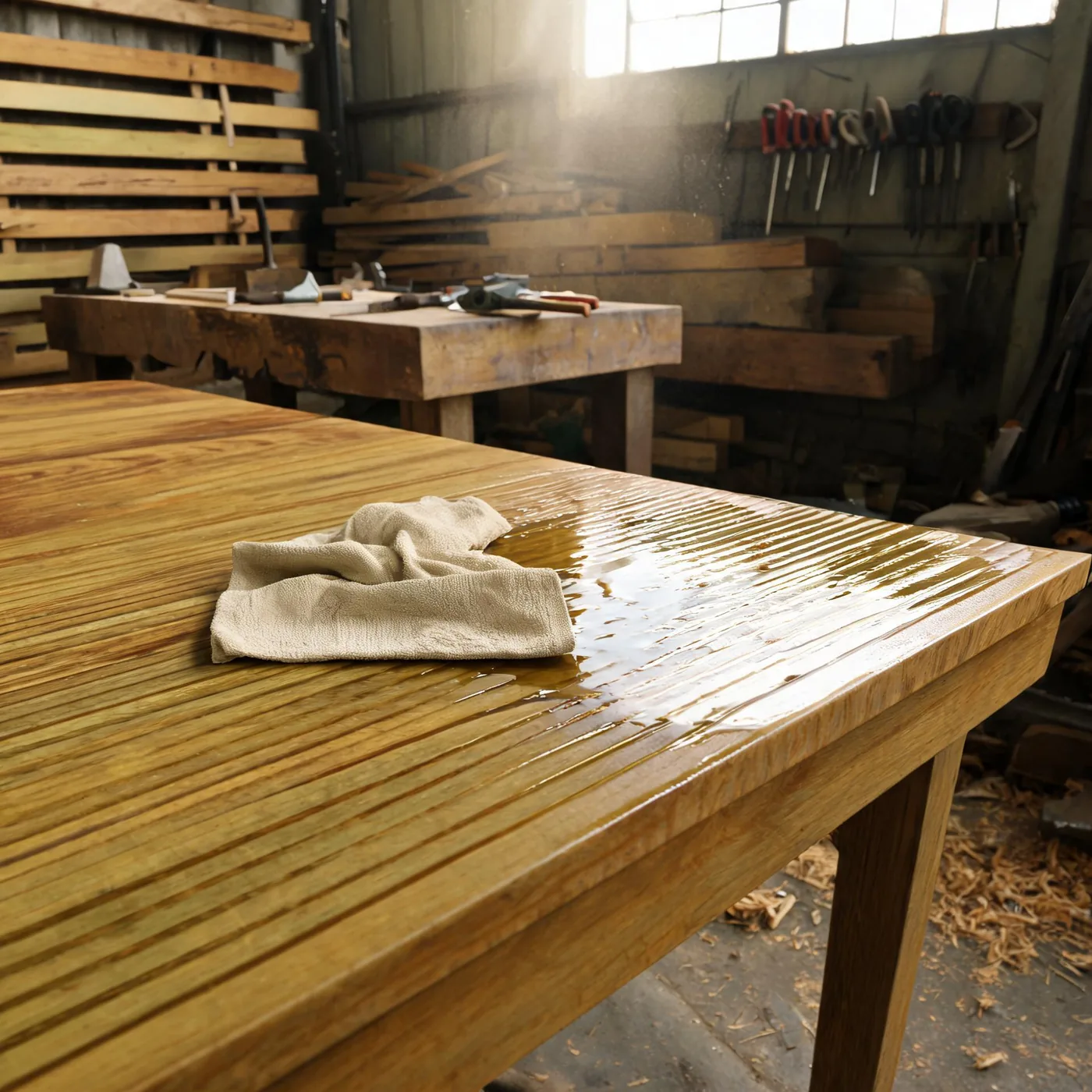
Once a year for a dining table, less often for a side table or a lounge chair. Sand lightly along the grain with 320 grit, vacuum the dust, then wipe on a thin coat of penetrating furniture oil and wipe off everything that has not soaked in after 15 minutes. The piece is back in use the next morning. Use a penetrating oil, not a wax or a varnish.
Marks, rings and scratches
A scratch in an oiled surface is repairable at home, which is the whole point of an oil finish. Sand the mark out along the grain with 240 then 320 grit, blend a hand's width past the edge of it, and re-oil that area. A white water ring usually lifts with the same treatment. A dent without broken fibers can often be raised with a damp cloth and a warm iron before you sand.
Humidity and heat
Keep the room at the humidity that is comfortable for people in it. Do not stand a piece directly over a floor register or hard against a radiator. A top that is dried on one face and not the other is the one way to make solid wood cup. In a dry winter climate a room humidifier does more for the furniture than anything you put on the surface.
Cushions
Linen and wool felt covers unzip and wash cold, flat dry, no tumble. Do not bleach the unbleached linen. Foam inserts are not washable. Sun fades both fabrics over years, so rotate the cushions if the piece sits in direct light.